
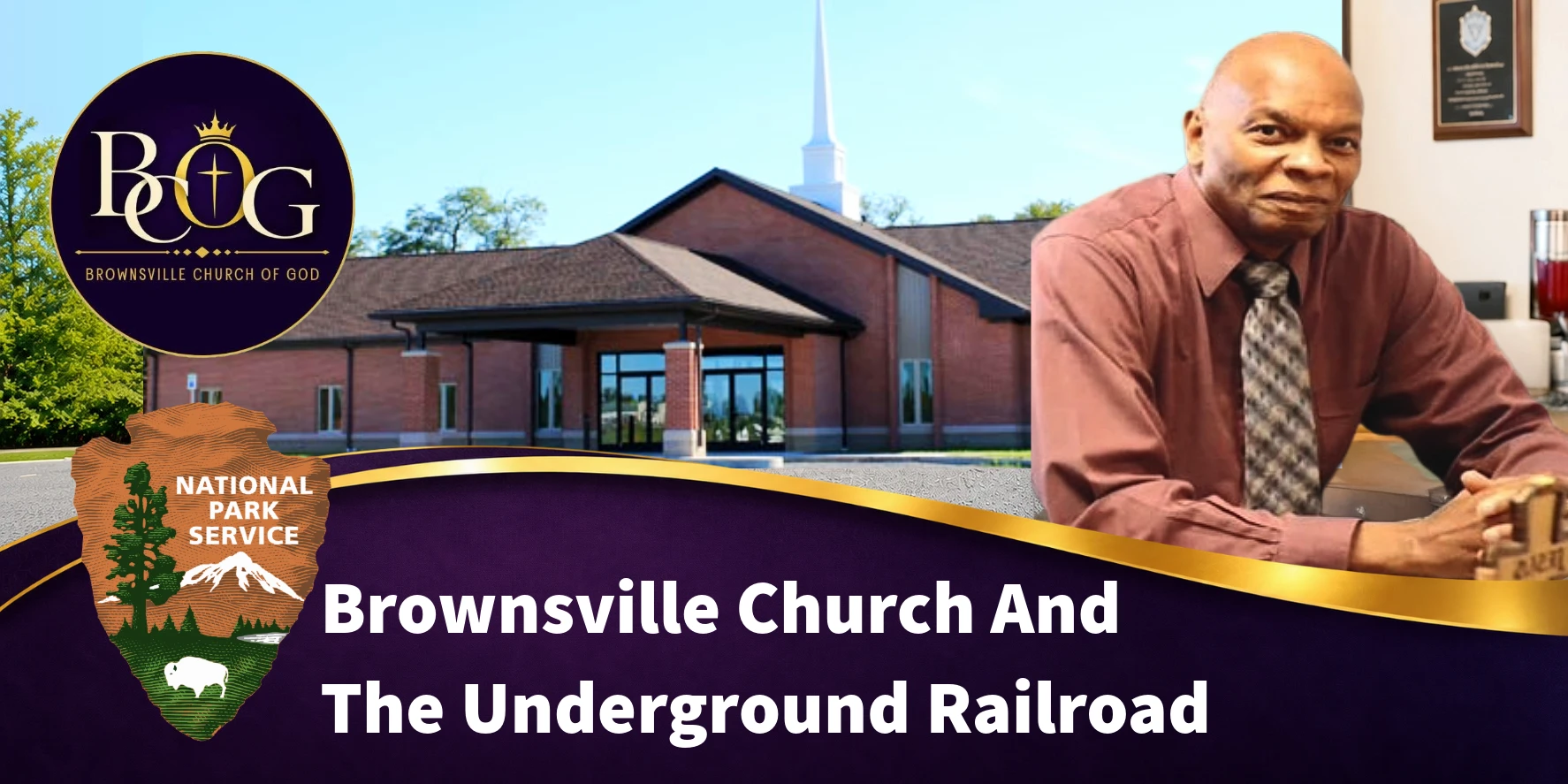
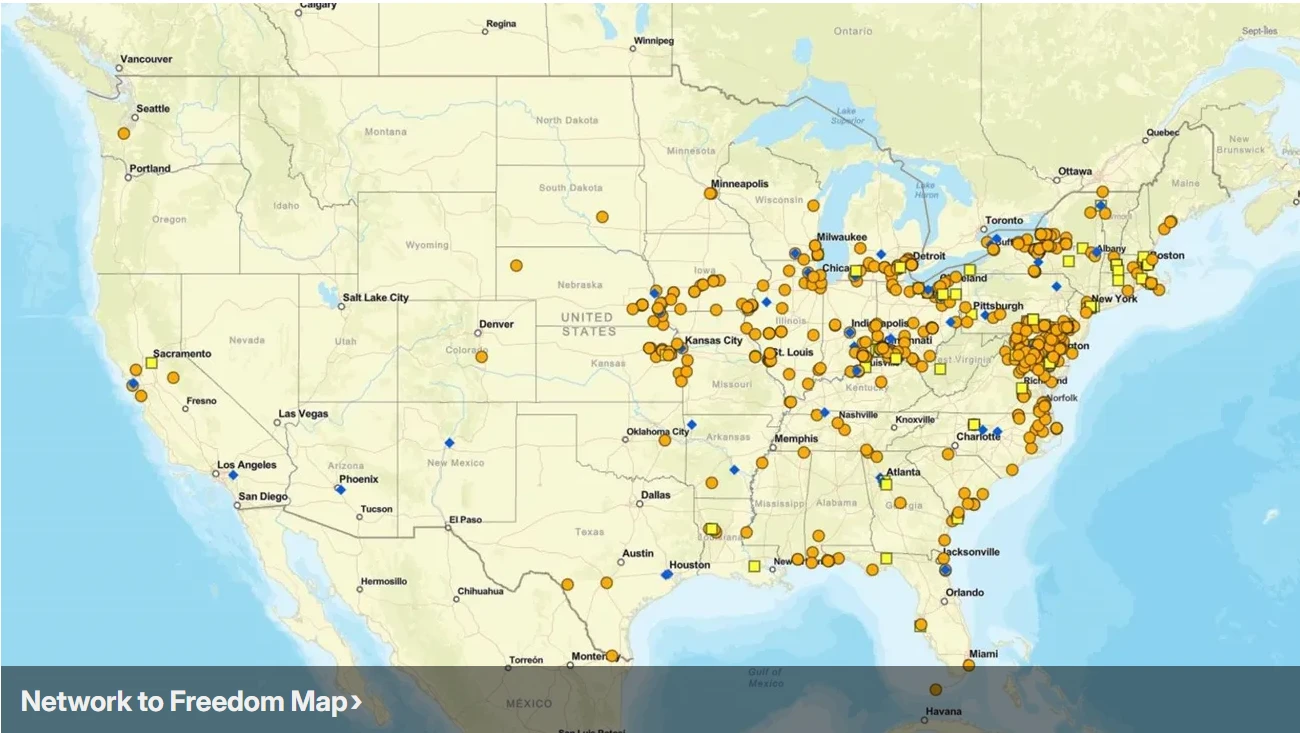
Brownsville, Pennsylvania has just been added to the Underground Railroad Network to Freedom. With over 800 locations spread across 41 states, The Network to Freedom was created to “honor, preserve and promote the history of resistance to enslavement through escape and flight”, according to their website. Importantly, Brownsville Church of God’s cemetery has also been added to the list in the latest announcement.
The Network to Freedom national database can be found on the National Parks Service website here:
The press release states that, “Pastor Victor Johnson of the Brownsville Church of God, the cemetery team and the congregation rejoiced in the winning of these two prestigious awards.”
A portion of the press has been pasted below:
“The application for both the Underground Railroad Network to Freedom and for the PHMC State Historical Marker are part of an ongoing collaboration between the Brownsville Church of God and the Shippensburg University History Department.
Together, the student, faculty, and community members worked together to document the rich history of the Brownsville community and the Brownsville Church of God from their founding to the present day. Shippensburg University students conducted oral histories, searched historic archives and newspapers, and undertook hands-on fieldwork, including remote sensing to locate unmarked graves in the Brownsville Church of God Cemetery. Using the materials collected, Shippensburg University Professor of History Dr. Steven Burg and Applied History graduate students wrote the successful applications for both the PHMC State Historical Marker and the Underground Railroad Network to Freedom.
Dr. Burg noted, “It has been a powerful experience for me and my students to work together with the members of the Brownsville Church of God to bring this important story to light. We are absolutely thrilled that both the National Park Service and the Commonwealth of Pennsylvania recognized Brownsville’s role on the Underground Railroad. We feel really honored to help others to discover this remarkable piece of American history that happened right here in Franklin County.”
The story of Brownsville continued even after the Civil War. In 1863, Confederate forces destroyed the Caledonia Iron Works, eliminating the major source of jobs for Brownsville residents. Nevertheless, Brownsville endured.
Around 1870, an itinerant minister named Perry Stanton of the Eastern PA Conference Churches of God came to the area and helped to establish a congregation. The Churches of God was founded by John Winebrenner who became very active in the Anti-Slavery Society of Harrisburg in January 1836. Today, the Brownsville Church of God is a member in the Eastern Region of the Churches of God General Conference.”
Read the full Press Release here on Brownsville’s website: Brownsville Cemetery History
Pastor Victor Johnson provided insight into how this initiative began, citing his own personal background and relationship to the church’s cemetery.
“The cemetery was not in good shape at all. And there's a lot of people buried there, family members of mine as well as of my wife… And so, I became very broken about the cemetery, and I felt that we needed to do something to recognize those that were laid there and to bring it to some type of restoration. So, it was a heavy burden on my heart.”
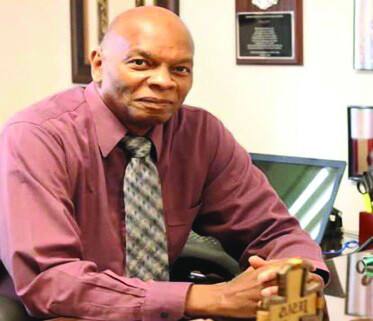 Pastor Victor Johnson
When Dr. Steve Burg from Shippensburg University reached out in 2023 to talk to the Cemetery Committee, it kick started a multi-year project that has resulted in the restoration and maintenance of the historic cemetery, but also a deep investigation into the people and stories buried there.
“For over 20 years, I have been working with cemeteries, particularly historic cemeteries in Pennsylvania connected with African American communities,” Dr. Burg said. “I live in Franklin county; I was already aware of a lot of the cemeteries in that area. I knew a little bit about the history of Brownsville, and I was very interested to try and help the church to understand the history of their cemetery, and it seemed to be an important story that needed to be told.”
The Brownsville Cemetery committee, in partnership with Shippensburg University’s Dr. Steve Burg and his students, began with both archival research and field work, using special equipment to see beneath the ground without disturbing the cemetery. Dr. Steve said that "we did some ground penetrating radar, to try and determine where there were unmarked graves, and it’s just been a phenomenal project; the church has been such a supportive and enthusiastic partner.
A lot of new information came to light which Brownsville Church did not have in their own archive. The Brownsville church was made aware of the deeper connections between the community, slavery, and the Underground Railroad. The students themselves were invited by the church to come to Sunday worship and present their findings as guest speakers.
Both Pastor Victor and Dr. Burg said that while Brownsville Church was thrilled with all of the insights the collaboration brought, the students were also tremendous beneficiaries.
Dr. Burg explained that this 2 year project was a unique education experience for the students, who normally learn history in a classroom. “For me, that was one of the very important educational pieces. My students going to a place where they don’t know people, an unfamiliar space, talking about history, what it means, why it’s important to people.”
This kind of educational experience helped to better prepare the students for what a vocation of history might be like outside of education. “If you work at the national park, you don’t pick who your audience is. If you work at a museum, it’s whoever walks through the door. That’s an important piece of this,” Dr. Burg said.
Perhaps some of the most meaningful history was found when students dug through the national archive to find records of the veterans in the cemetery and provided those records to the families that still attend Brownsville. Dr. Burg said that “the families can know those stories, and it was a very powerful thing.”
The collaboration, which bore mutual fruit, seems to have fostered a beautiful relationship between the church and the university. The church found connections to the past and their legacy that had only ever been rumored and families were reunited with the truth of their ancestors. Meanwhile, the students were able to achieve a truly rigorous and prestigious thing, as the National Park Service recognition is highly competitive, requiring diligent and detailed submissions.
There is of course still much work to be done. And Brownsville Church of God is currently raising funds to complete the work on the cemetery so that it is properly maintained, but also properly codified so future family members and researchers have a clear understanding of all that the cemetery means. Interested supporters can find ways to give here: Support the Cemetery project
Our own historical archives connect to the press release at the mention of Perry Stanton, the first black church of God minister, licensed in 1844, well before the Civil War, but deep amidst the struggle for abolitionism to which many early Church of God members were committed.
We’ve written about Perry Stanton and the CGGC’s historic ties to the Underground Railroad before, like in this issue of the Advocate, where we recount some historical evidence for the alignment between our church locations and common paths of the Underground Railroad.
Congratulations to Brownsville Church of God, for both the historic legacy work they have achieved in this announcement, and the intentional and missional heart God has given them.
CGGC eNews—Vol. 20, No. 34


Login To Leave Comment