
Ross Osborn has been the pastor of Faith Covenant Church in Monticello, IN since 2023, and their Idaville, IN campus, Faith Connection. More recently, Pastor Ross has helped found a new non-profit in White County called the Kindess Coalition, whose chief aim is to “Mobilizing generosity, service, and kindness in order to make a difference.”
The Kindness Coalition isn’t a church organization and that interested us. Thanks to influential speakers like Mark DeYmaz (who we interviewed recently here) there is new interest in non-profit organizations that work outside of official church structure, but which still contribute effectively toward ministry work.
To learn more about the Kindness Coalition, we asked founder Ross Osborn about their mission, the impact they are having in their community, and how the love of Jesus inspires their work. To learn more about the Kindness Coalition and to see their ongoing work, see their website here: https://give-kindness.org/
What is the Kindness Coalition and what is the impetus behind it?
The Kindness Coalition is a nonprofit organization that exists to mobilize generosity, service, and kindness to meet real needs and strengthen our community. The idea grew out of years of ministry and community involvement. As a pastor, I have spent a lot of time walking with people through difficult seasons. Sometimes the need was spiritual. Sometimes it was relational. But many times the need was very practical. A family needed groceries or a single parent needed a little help making ends meet. Maybe a homeowner needed help with a project they could no longer do themselves…someone simply needed to know where to turn.
What I kept seeing was that there were people who needed help and people who wanted to help, but they often never found each other. The Kindness Coalition was created to help bridge that gap. We identify needs, connect volunteers, launch community initiatives, and partner with organizations that are already doing great work. We are not trying to replace anyone. We don’t want to compete or re-create the wheel. We are simply trying to make it easier for neighbors to help neighbors.
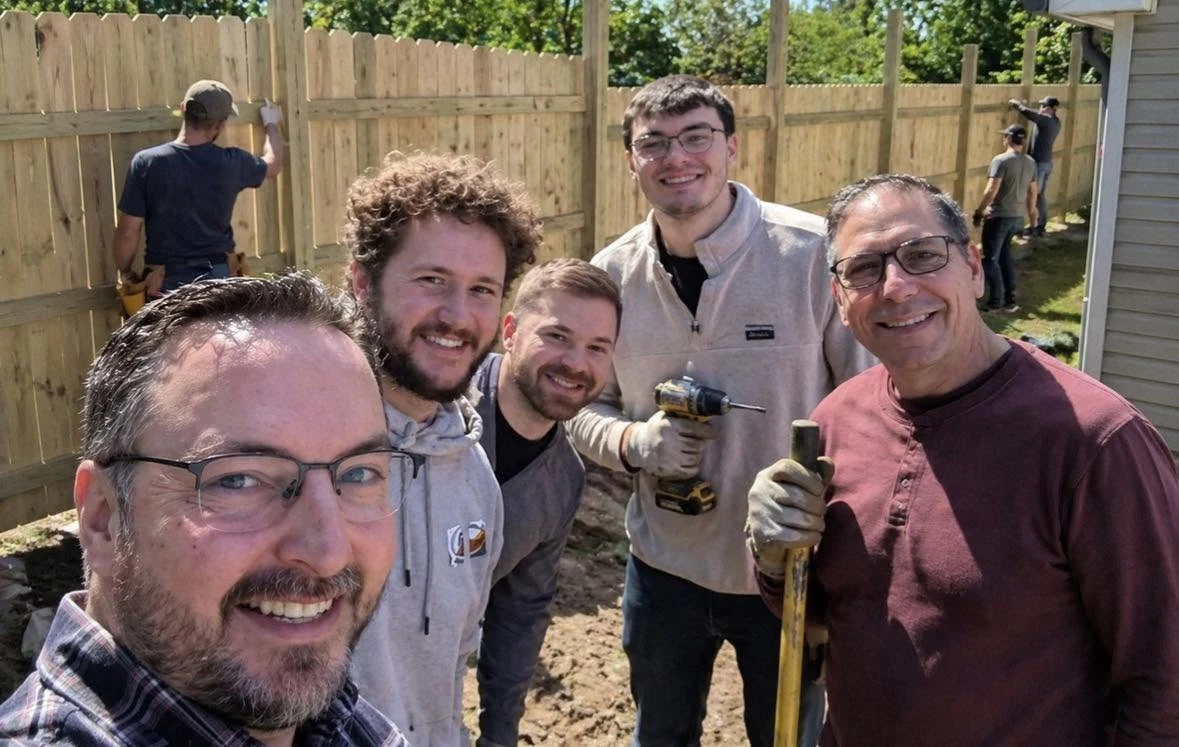 Ross Osborn (L), Staff and Volunteers
What specific niche does the Kindness Coalition fill in the White County community?
The Kindness Coalition focuses on practical needs that often go unmet because they are too small for a formal agency but too large for someone to handle alone. One of the primary ways we do that is through our partnership with NeighborLink.
NeighborLink is an online platform that allows people to post needs and allows volunteers to respond. Those needs can range from yard work and small home repairs to cleaning gutters, building ramps, moving furniture, or helping address safety concerns around a home.
We also launch community initiatives around specific needs. Earlier this year, we provided grocery assistance to twenty single-parent households with school-aged children. We later helped raise funds for a local family in need of a wheelchair-accessible vehicle. Right now, we are partnering with Sleep in Heavenly Peace to help provide beds for children who do not have one of their own. At its core, the Kindness Coalition serves as a hub. We help connect people who want to help with people who need help. Sometimes that means organizing volunteers through NeighborLink. Sometimes it means launching a community initiative around a specific need. Sometimes it simply means connecting someone to the right resource. We have never tried to be everything for everybody. There are already great churches, nonprofits, schools, and agencies serving our community. Rather than duplicating those efforts, we try to fill gaps and build bridges. If we can’t meet a need ourselves, we want to know who can and help make that connection. We believe communities are strongest when organizations work together, and that has been part of our approach from day one.
The Kindness Coalition is not officially a church organization, so what is the connection between the mission of the church and the Kindness Coalition?
My faith absolutely influenced the creation of the Kindness Coalition. As a follower of Jesus and as a pastor, I believe Christians should care deeply about the well-being of their communities. Scripture repeatedly calls us to love our neighbors, serve others, and show compassion in practical ways. Those convictions played a significant role in why the Kindness Coalition was created. At the same time, I did not want the Kindness Coalition to be a ministry of Faith Covenant Fellowship. I wanted it to be something the entire community could participate in. The church has a unique mission. We gather for worship, make disciples, preach the gospel, and help people grow in their relationship with Christ. The Kindness Coalition is not a replacement for that mission. If anything, it creates another opportunity for the church to be the church…and go.
Jesus never called His followers to stay inside church buildings. He called us to go into the world, love our neighbors, serve others, and make disciples. The Kindness Coalition creates practical opportunities for believers to do exactly that. Through volunteer projects, community initiatives, partnerships with schools and nonprofits, and countless everyday interactions, Christians are able to step into spaces where genuine needs exist and meaningful relationships can be built. In many cases, those are places where a local church may have limited access or where people may never choose to attend a church service on their own.
That is one of the reasons I felt a community nonprofit was important. It creates opportunities for Christ followers to cross paths with people they might never otherwise meet. Not as a project. Not as an agenda. But as neighbors serving neighbors. When believers consistently show up, meet needs, listen well, and genuinely care about people, trust begins to grow. Relationships are formed, conversations happen, and sometimes those conversations lead to opportunities to share the hope we have in Christ.
Ultimately, my vision is much bigger than the Kindness Coalition itself. My hope is that people experience the love of Jesus through the actions of His people. I hope lives are changed. I hope people come to faith in Christ. And I hope they become connected to healthy local churches where they can continue growing as disciples.
In fact, I would love to see every local church in our community benefit from this. If believers from different congregations are actively serving, building relationships, and living out their faith beyond the walls of the church, then it stands to reason that some of those relationships will lead people to Jesus and into local faith communities. The success of the Kindness Coalition will never be measured simply by projects completed or dollars raised. Those things matter, but they are not the ultimate goal. The ultimate goal is to create more opportunities for the people of God to be present in the community, demonstrate the love of Christ, and point people toward Him.
How has the Kindness Coalition impacted the community of Monticello, Indiana?
One of the things I appreciate most about the Kindness Coalition is that some of our most meaningful impact never appears on our website or social media. The stories people see online are important because they help raise awareness and invite others to get involved. Initiatives like helping Ember’s family secure a wheelchair-accessible vehicle are visible examples of what can happen when a community comes together around a need. Through that effort, churches, schools, businesses, and community members contributed more than $6,350 to help a local family. But many of the moments that matter most happen quietly. Even in these early months, we have helped connect families with food assistance through local schools, churches, and community partners. We have worked alongside organizations that specialize in housing to help individuals and families navigate difficult situations. We have helped connect people with transportation resources, community services, and other forms of assistance that they may not have known existed. In one situation, we were able to help connect a family with resources and partners that allowed them to secure housing and remain together during a difficult season.
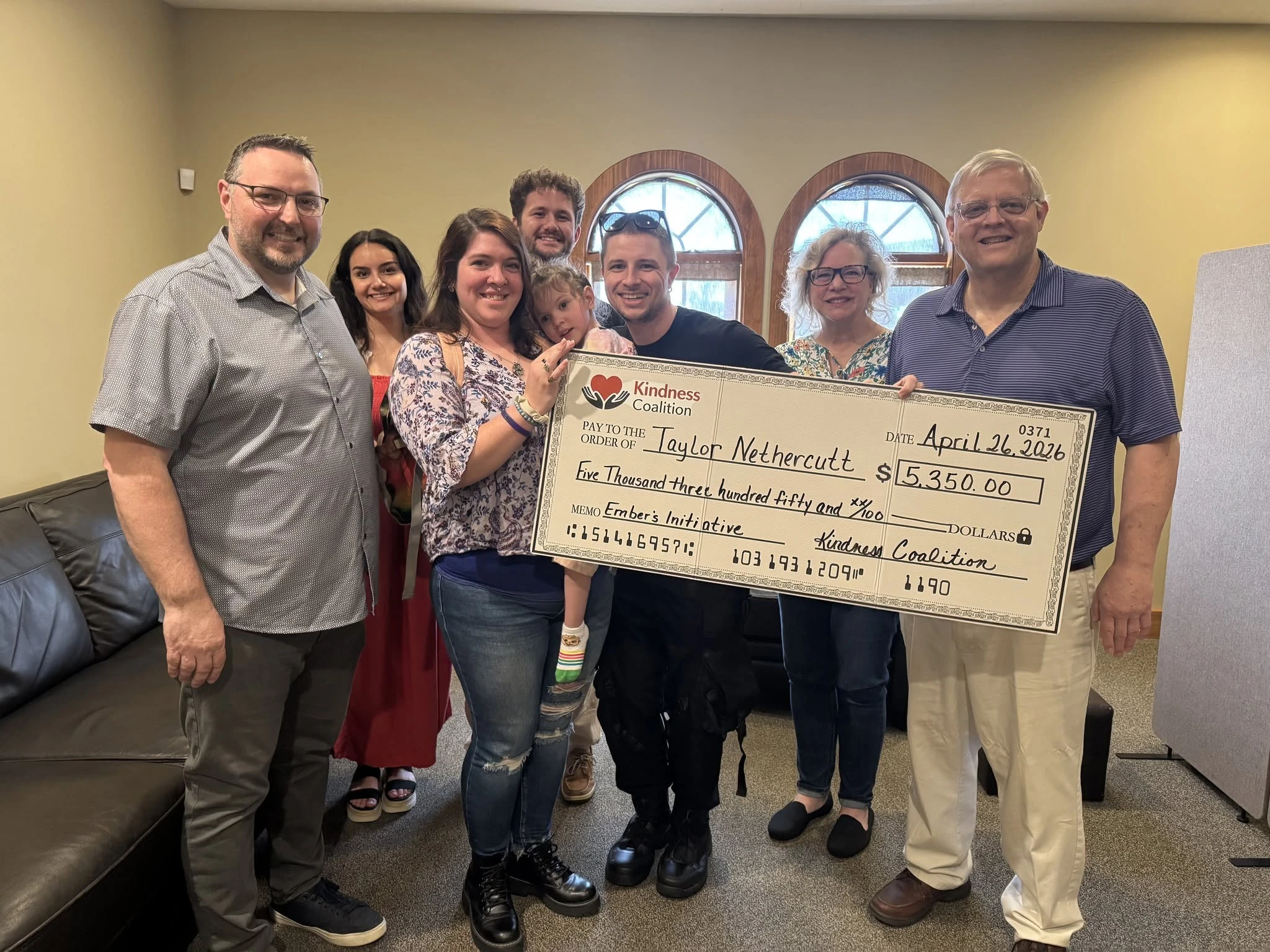
Those stories rarely make it to social media, and that’s okay. The goal has never been recognition. The goal is helping people. What encourages me most is seeing what happens when organizations work together. Very few of these stories are about the Kindness Coalition acting alone. More often, we are helping connect people to churches, schools, nonprofits, agencies, and community members who are already positioned to help. Sometimes our role is leading an initiative. Other times our role is simply making the right phone call or introducing the right people. When I think about impact, I certainly think about projects completed and dollars raised. But I also think about families who found help when they didn’t know where to turn, individuals who were connected to resources they didn’t know existed, and people who were reminded that they weren’t facing their challenges alone. Those stories may never be shared publicly, but they matter just as much as the ones everyone sees.
What are the Kindness Coalition’s goals for 2026? And how do you measure success?
Our goals for 2026 are fairly simple. We want to continue helping more people, engaging more volunteers, and strengthening partnerships throughout the community. One of the things we have learned very quickly is that there is no shortage of needs and there is no shortage of people who care. The challenge is often helping those two find each other. We want to continue improving our ability to do that. We would love to see more people serving through NeighborLink. We would love to see more practical needs being met. We would love to see churches, schools, businesses, nonprofits, and community members continuing to work together when needs arise.
We do pay attention to numbers because they help us understand whether we are making progress. We track volunteers, projects completed, donations received, and people served. Those things matter. At the same time, some of the most important things are harder to measure. Success is a family receiving help when they need it. Success is a volunteer stepping up for the first time and realizing they can make a difference. Success is seeing people from different backgrounds come together to help a neighbor. Success is knowing that a need that might have gone unmet was addressed because someone chose to get involved. If we can help more people, engage more volunteers, and continue connecting needs with resources, then I think we will be headed in the right direction.
What have the challenges been so far?
One of our biggest challenges has been helping people understand what the Kindness Coalition is and what it is not. Because we exist to help meet needs, some people naturally assume we function like a charity that directly pays bills or provides financial assistance to individuals who contact us. While there may be situations where we help raise support around a specific need, that is generally not our model. From the beginning, we have worked through trusted relationships and community partnerships whenever possible. Schools, churches, nonprofits, community leaders, and other organizations often help identify needs because they are already walking alongside the people they serve. That provides both a filter and a safeguard. It helps ensure that resources are directed where they are most needed while also connecting people with longer-term support systems rather than simply addressing a single immediate need.
A second challenge has been encouraging people to post needs through NeighborLink. Many people are surprised to learn there is a platform where they can post a need and have volunteers step forward to help. In the beginning, some people were hesitant because it almost seemed too good to be true. That has started to change as projects are completed and word spreads throughout the community. As people see real needs being met and hear stories from neighbors who have received help, trust continues to grow. We are seeing more volunteers sign up and more needs being posted than when we first launched, which is encouraging.
As a young organization, awareness is always a challenge as well. There are still many people who have never heard of us or do not yet understand how they can get involved. But we continue to be encouraged by the partnerships that have formed and by the generosity we see throughout our community.
How is the Kindness Coalition supported?
The Kindness Coalition is supported through donations, volunteers, partnerships, and grant opportunities. Most of our support to date has come from individuals, churches, businesses, and community members who believe in what we are trying to accomplish. We have also applied for grants and continue to pursue funding opportunities that can help expand our impact and strengthen our ability to respond to needs in the community. Financial support allows us to launch community initiatives, maintain the systems that connect needs with resources, and continue building partnerships throughout the region. Volunteer support is equally important because many of the needs we address require willing hands more than financial resources.
One of the things I appreciate most is that support comes in many forms. Some people give financially. Some volunteer their time. Some help identify needs. Others open doors to partnerships and resources that can benefit the people we serve. Many people support us simply by sharing our social media posts, distributing flyers, telling others about NeighborLink, and helping spread the word about available resources and opportunities to serve. Ideally, the Kindness Coalition is supported by a broad cross-section of the community. When churches, businesses, foundations, civic organizations, schools, and individual community members all play a part, the impact becomes much greater than any one organization could achieve alone.
Is the Kindness Coalition specific to White County, or is it needed elsewhere?
The organization actually began as the White County Kindness Coalition because our initial focus was on serving White County and the surrounding area.
As we launched our partnership with NeighborLink, however, it became clear that many of the needs and volunteer opportunities extended beyond county lines. Our service area naturally grew to include communities throughout a roughly forty-five-mile region surrounding Monticello. Because of that growth, we eventually adopted the DBA name “Kindness Coalition,” which better reflects the broader area we now serve. While our work is rooted in north central Indiana, I believe the need exists almost everywhere. Every community has people who care. Every community has needs. What is often missing is a simple way to connect the two.
I do not believe every community needs to copy exactly what we are doing. Every area has different strengths, challenges, and existing organizations. But I do believe some of the principles are transferable. Build partnerships. Work with organizations that are already doing good work. Create pathways for people to serve. Focus on meeting practical needs. Make it easier for neighbors to help neighbors. Whether it is called the Kindness Coalition or something entirely different, I think every community benefits when people, churches, nonprofits, schools, businesses, and community leaders work together to care for their neighbors.
How do you see the Kindness Coalition adapting and changing in the future?
The organization is still young, so I expect it will continue to develop as we learn more about the needs in our community. What will not change is our commitment to helping people and creating opportunities for others to serve. As we grow, I expect we will strengthen partnerships, engage more volunteers, and increase the number of needs we are able to address. I also hope we continue building stronger connections between people, organizations, and resources throughout our region.
One thing we are already learning is that not every need fits neatly into a public initiative or fundraising campaign. Because of our relationships with schools, community organizations, and agencies that work directly with vulnerable families, we occasionally become aware of urgent situations where a quick response can make a significant difference. Sometimes the need involves housing. Sometimes it involves keeping a family stable during a crisis. Sometimes it involves helping prevent a situation from becoming much worse.
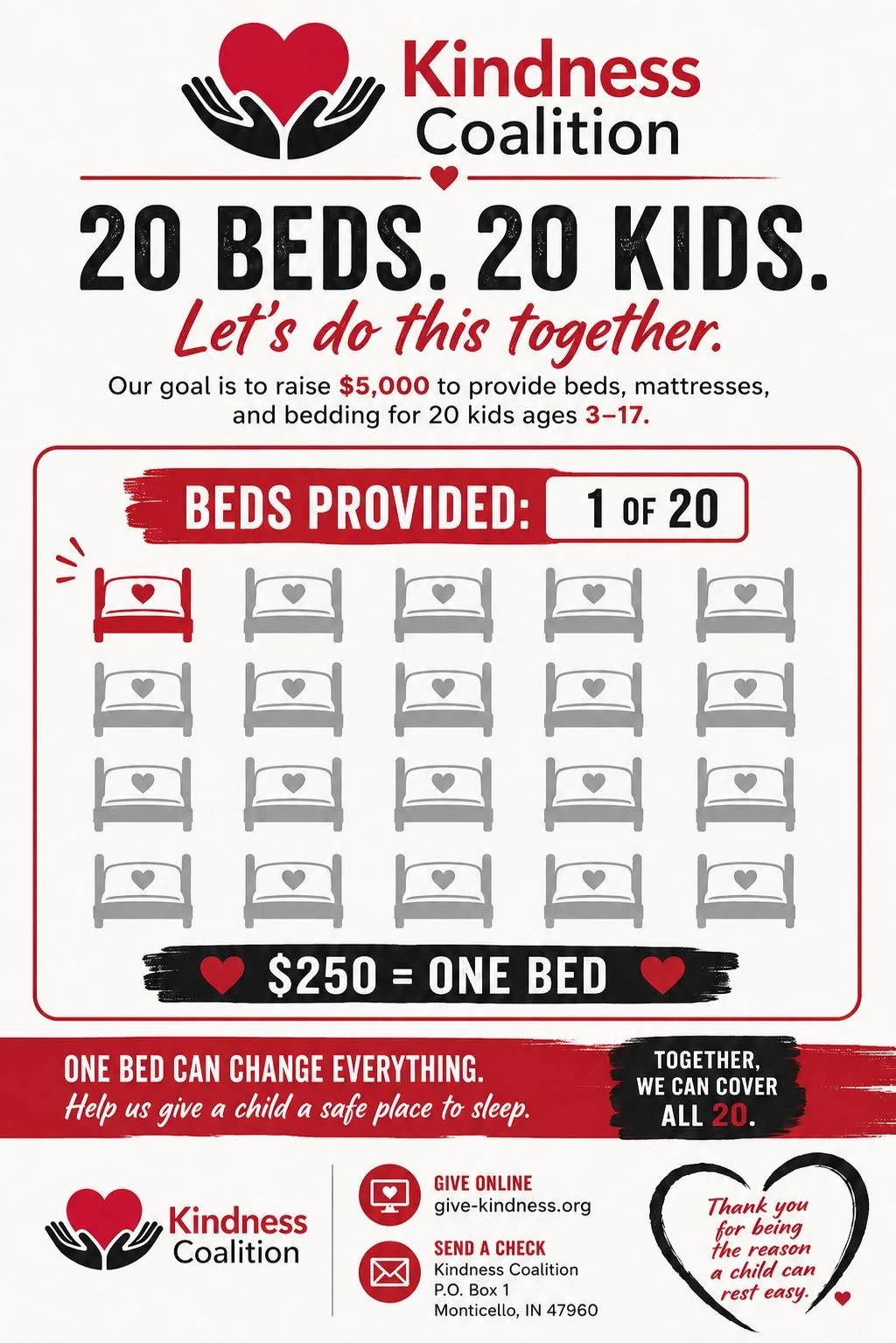
In those moments, there often isn’t time to launch a public initiative and wait weeks for support to come in. Action is needed quickly. As a result, one area I could see developing in the future is a discretionary assistance fund overseen by our board. It would not replace our partnership model or our larger community initiatives. Instead, it would give us the ability, with appropriate safeguards and board approval, to respond to certain urgent situations when trusted community partners bring a need to our attention and timing is critical. Some of the most meaningful opportunities to help people happen quietly and unexpectedly. We are learning that having the ability to respond thoughtfully and quickly in those moments may become an important part of our future.
My hope is that years from now the Kindness Coalition will be known as an organization that helped people, brought people together, and made it easier for neighbors to care for one another…and for the church to have an ongoing platform to get their people outside of the four walls and build relationships that lead to sharing the Gospel…and expanding the Kingdom!
Check the Kindness Coalition out on Facebook here: Kindness Coalition Facebook
CGGC eNews—Vol. 20, No. 29

Login To Leave Comment