
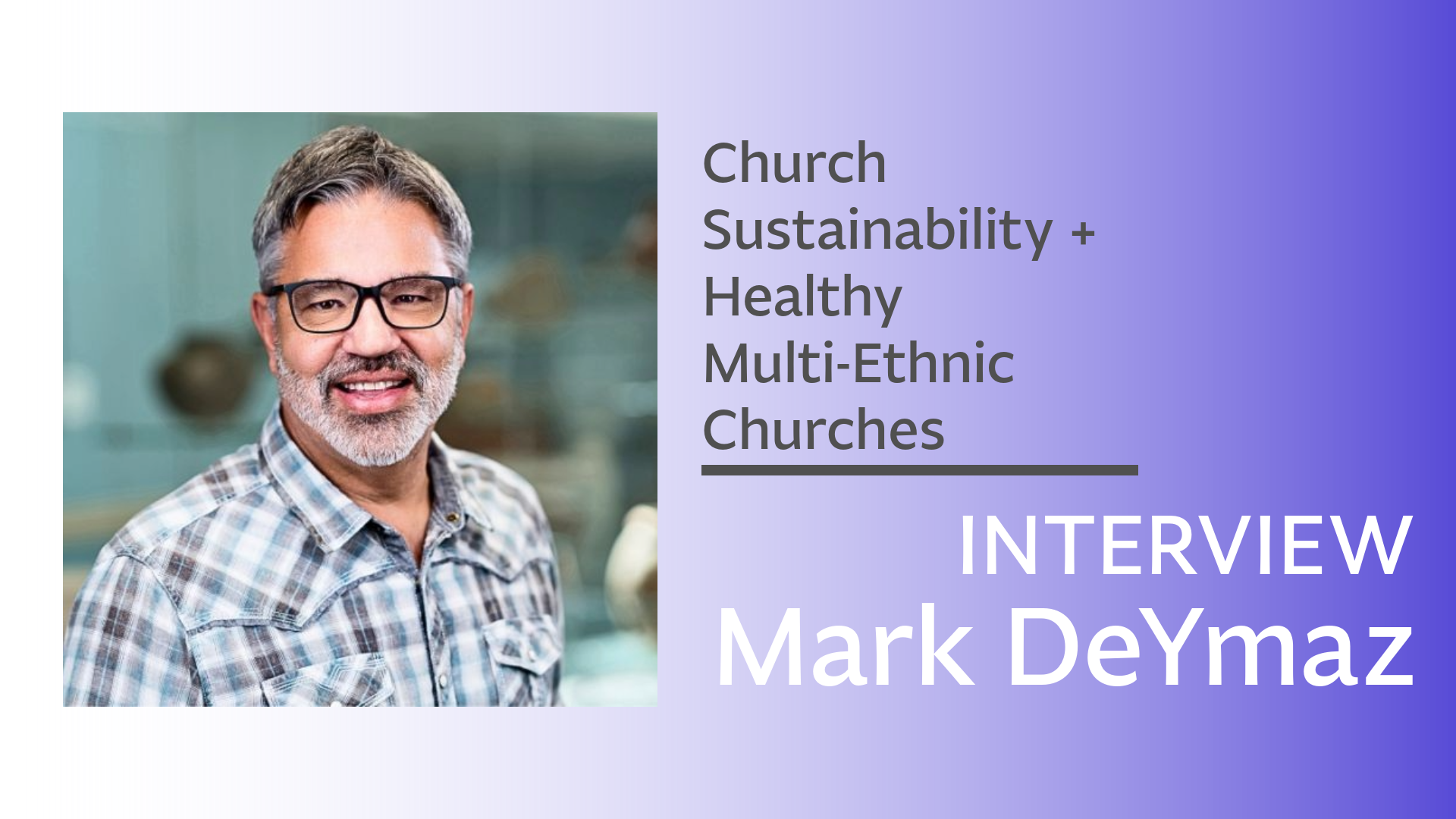
Mark DeYmaz will be the keynote speaker at this year’s Great Lakes Regional Conference sessions in June 2026. Mark’s the founder of Mosaic Church in Little Rock Arkansas. Since 2001, Mosaic has become a model of two big ideas, Healthy Multi-Ethnic Churches, and Financially Sustainable Churches. In fact, just last year we published a story from Brownsville Church of God called A Spiritual Journey: Building A Healthy Multiethnic Church, in which the authors cited Mark DeYmaz’s work.
Mark began iterating these ideas while working at a large, traditionally successful church. Mark was hired at a church in Little Rock with an average attendance of 2,000, and with 150 students in the youth program. Over 8 years, the church grew to 5,000 people, with a youth group of 600. The youth program alone had 9 full time staff, and Mark himself was in the top 2% of paid pastors in United States.
So why would Mark leave and start a new church called Mosaic? Mark was gracious enough to answer this question, and more, when we sat down for an interview. Find that, and Mark’s latest book below: Make Me an Instrument of Your Peace: Becoming Like Jesus Through the Prayer of St. Francis.
Can you tell us about how Mosaic was founded?
In the late 1990s, I was serving at a large and growing church in suburban Little Rock. By most standards, I was living the dream. But one day I looked around and realized that, despite all the success, the church reflected very little of the diversity of God’s kingdom. I began asking a question that has shaped the rest of my life and ministry: If the kingdom of heaven is not segregated, why on earth is the church?
In 2001, after eighteen years in student ministry, my wife and I sensed God calling us to leave the suburbs and plant a church in the heart of Little Rock’s University District. At the time, the area faced significant poverty, high crime, and deep social division. We believed the Gospel demanded more than preaching reconciliation; it required demonstrating it.
From the beginning, Mosaic was built around a simple but challenging conviction: that people of different ethnic, economic, and cultural backgrounds could walk, work, and worship God together as one. Not because diversity is trendy, but because it is biblical. In an increasingly diverse society, the credibility of the Gospel is strengthened when the church visibly reflects the reconciling power of Jesus Christ.
Two big topics you talk about are the need for healthy multiethnic local churches and financial sustainability, what you’ve labeled “Church Economics.” Where does the interest lie for both of these and how do they intersect?
The connection between multiethnic ministry and financial sustainability is stronger than many people realize. Healthy churches must be both missionally vibrant and economically sustainable.
For decades, most churches operated within a cultural and economic environment that no longer exists. Traditional giving patterns have changed dramatically, and many churches are discovering that tithes and offerings alone are no longer sufficient to sustain long-term ministry impact at scale.
When I wrote The Coming Revolution in Church Economics, I pointed out that the overwhelming majority of giving to American churches was still coming from older generations. As demographics shift, churches must rethink how they structure ministry, steward assets, and generate sustainable revenue.
At Mosaic, we realized early on that if we wanted to engage issues like poverty, foster care, food insecurity, immigrant communities, and community development in meaningful ways, we would need to think differently. That led us to embrace innovation, create multiple streams of income, and leverage our assets for mission.
Church Economics is not about replacing generosity. It is about understanding and exercising biblical stewardship so the church can remain faithful, effective, and sustainable in the 21st century.
What kind of people do you need in a leadership team to make this transition?
In the 20th century, many churches were built around a single senior pastor model. Increasingly, however, the complexity of ministry today requires team-based leadership.
At Mosaic, we practice team-based leadership as opposed to the traditional senior pastor model. At the top of the organization, then, a directional leader, a senior pastor, and an executive pastor work synergistically, functioning together as one in the strength of their gifting. Each role matters, and no one person naturally excels in all three.
A visionary leader helps the church see the future. A shepherd cares for and develops people. An operational leader builds systems, structure, and organizational alignment. When those gifts work together in humility and mutual respect, the church becomes healthier and more effective.
This team-based leadership approach requires emotional security. Insecure leaders struggle to share responsibility or celebrate the strengths of others. Effective team-based leadership, however, necessitates humility, maturity, and trust.
The goal is not simply to build a bigger church. The goal is to build a missionally vibrant, community-facing, and financially sustainable church.
Presumably a lot of the churches do not have the capacity to staff up to meet all of those needs. What do you think about that?
Anybody reading about or looking into our story should recognize that Mosaic did not become what it is overnight. We have been chasing the fruit of long obedience in the same direction for nearly twenty-five years, pursuing our passion for Kingdom and community while remaining prayerful, patient, and persistent.
For the first fifteen years, we did not own a building. We did not have many of the staff positions people now assume are essential. What people see today is the result of long-term faithfulness, patience, and perseverance.
Too often, pastors compare someone else’s current reality to their own beginning. That is discouraging and unhelpful. Healthy churches are built over time.
I have always believed in what the church could become, but it took years of prayer, sacrifice, experimentation, and persistence to get where we are today. Sustainable ministry is rarely fast, but it can be deeply fruitful over time.
What resources does the average church have that they might be able to leverage towards this goal?
There’s three big asset buckets and every church has them. People, money, and facilities. Now, I shouldn't say every church has facilities because they don't. But by playing this game, you can get facilities.
On the people side, your asset isn't just the people you have, it's the people they know. And leveraging your people to find your way to people they know is an asset.
Money, not just the money that you have or don't have, but the ability a church has to aggregate money quickly. That's an asset. For instance, think about a building campaign. “Hey, we'd like to raise $200,000 in the next 12 months to do this.” That ability to stand in front of a large group of people and to be trusted and to set a goal and ask them collectively to give in a large amount is an asset. I mean, if I'm starting a business, how many people can I go to and raise $200,000 in 12 months, right? But if I stand in front of a church with a vision, I can do it quick. That's also an asset.
And then of course, land and facilities that can be leveraged. Churches across this country sit empty. Their buildings, from Monday to Saturday, doing absolutely nothing for the kingdom, absolutely nothing for the community. We have to leverage those, rent them, monetize them. In our case, we not only rent, but we have an event center. Not only does our rent pay the mortgage, we make money by renting our building. And that's not one penny of our people's money that they put on an offering plate. That’s just smart and good stewardship and smart economics.
Great Lakes Conference is coming up for our denomination in June. What can they look forward to? Why should they bring their lay leaders?
I hope people leave encouraged, inspired, challenged, and equipped.
We are going to take an honest look at both the strengths and weaknesses of the church in the 21st century. From there, we will explore practical and biblical pathways toward becoming more missionally vibrant, culturally credible, and financially sustainable.
My goal is not simply to inspire pastors. I want to equip leaders with practical frameworks they can actually implement.
That is also why lay leaders should attend. Churches cannot move toward meaningful change if senior pastors are trying to lead alone. Sustainable transformation requires shared understanding, shared vision, and shared ownership among leadership teams.
But how do you feel about the progress that the church is making with healthy multiethnic churches?
I often describe the multiethnic church movement like the stock market. There are seasons of progress and seasons of resistance, but over time the trajectory continues upward.
What we have witnessed over the past twenty-five years is remarkable. For generations, the American church remained largely segregated by race and class. Today, however, more churches are recognizing that reconciliation and visible unity are not optional issues but central expressions of the Gospel.
I have long described this as a hundred-year movement. We are still relatively early in that process. But I believe the momentum is undeniable.
Between now and 2050, healthy multiethnic churches will increasingly become normative, the model younger generations expect and seek. In a divided culture, churches that visibly reflect the reconciling power of Christ will possess unique credibility and influence.
The movement is not perfect, and there will continue to be challenges. But the train has left the station. There is no going back.
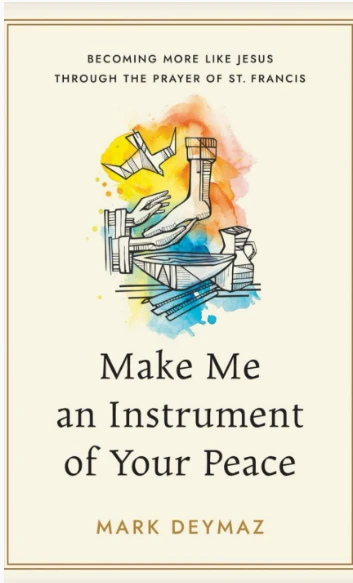
Want to hear more from Mark DeYmaz? You can find his latest book Make Me an Instrument of Your Peace: Becoming Like Jesus Through the Prayer of St. Francis right from Mark’s website, MarkDeYmaz.com. Make Me an Instrument of Your Peace walks through a famous prayer of St. Francis of Assisi to help you become a better peacemaker in a world full of chaos. You can also find the books referenced in this interview like The Coming Revolution in Church Economics, and Building a Healthy Multi-Ethnic Church.
The Global Advocate, Summer 2026, Volume 191, Issue 3

Login To Leave Comment